THE GAMBIA LAUNCHES ITS NATIONAL EARLY WARNING AND RESPONSE (NEWAR) POLICY!
THE GAMBIA LAUNCHES ITS NATIONAL EARLY WARNING AND RESPONSE (NEWAR) POLICY!
From Early Warning to Early Action: Building a Peaceful, Resilient and Inclusive Gambia!
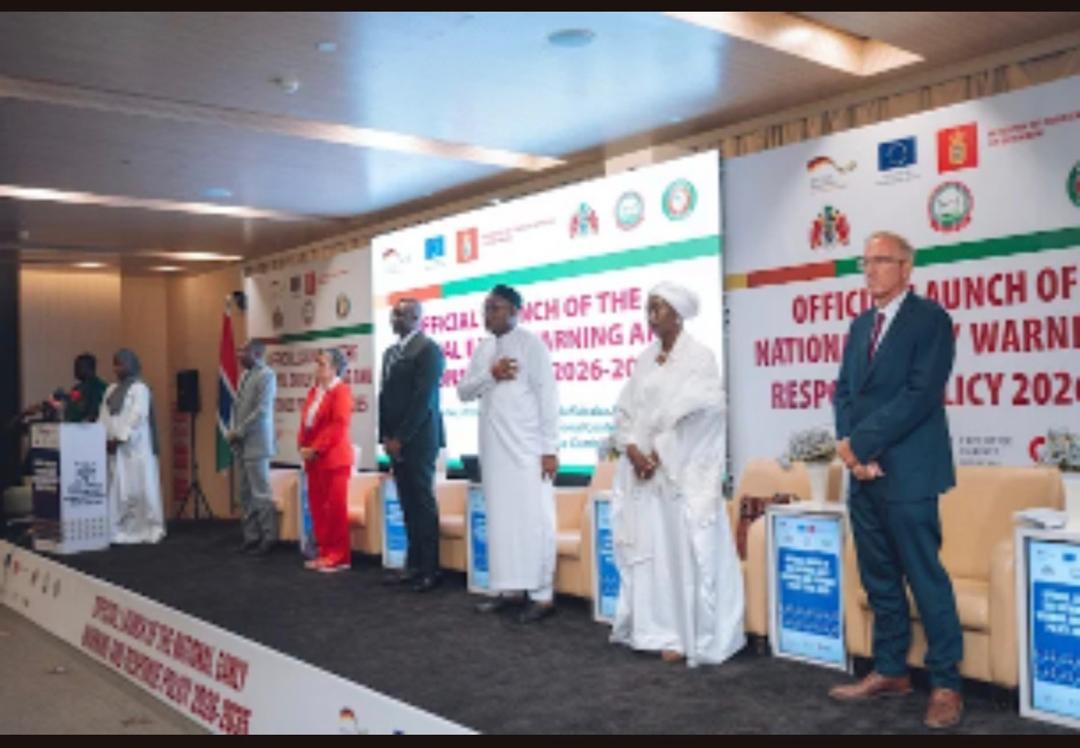
On 29th September 2026, The Gambia marked a significant milestone in its peace and security architecture with the official launch of the National Early Warning and Response (NEWAR) Policy, in a ceremony graced by the Vice President of The Gambia, Vice President of ECOWAS, EU and German Ambassadors, senior government officials, regional representatives and other key stakeholders.
The policy provides a strategic framework for anticipating emerging human security threats, strengthening institutional coordination and ensuring timely responses to risks before they escalate into crises.
In their respective statements, dignitaries underscored the importance of prevention, political commitment, adequate resources, community ownership and multi-stakeholder collaboration in ensuring effective implementation.
The policy envisions a peaceful, resilient and inclusive Gambia by 2035, driven by coordinated, people-centred early warning and response systems.
A major highlight was the keynote address by the Vice President of The Gambia, who reaffirmed his commitment to the policy, emphasizing that early warning means little without early action. This was followed by the symbolic presentation of the policy and recognition of stakeholders who contributed to its development.
The launch also featured a high-level panel discussion on “Strengthening Early Warning in West Africa: From National Policy to Regional Action,” bringing together representatives from WANEP, Nigeria, Ghana, Côte d’Ivoire, Guinea and regional peace and security experts. Discussions emphasized cross-border collaboration, community engagement, civil society participation, institutional capacity-building and information sharing.
With this landmark policy, The Gambia takes an important step towards shifting from reactive crisis management to proactive risk prevention and coordinated response.
The message is clear: We must not only see the warning signs; we must act before threats become crises!